
When we try to articulate what we truly are, we encounter a practical paradox: the words we use to describe ourselves (profession, origin, character) never fully capture what we feel we are. This gap between the definition we give of ourselves and the lived experience is precisely the ground where the philosophy of the essence of being takes root.
The question is not abstract. It arises every time we have to choose between two life directions, justify a professional choice, or simply answer a child who asks “why do we exist”.
Essence and existence: a divide that changes the way we think

We often hear that existence precedes essence, a phrase attributed to Sartre. In everyday life, this means that we are not born with a manual. We build ourselves through our actions, commitments, and renunciations. Essence, if it exists, comes afterward, like a summary.
Aristotle saw things differently. For him, each thing has an essence that defines it even before it acts. An oak is already an oak in the acorn. This interpretation dominated Western thought for centuries, and it still structures our way of classifying objects, species, and social roles.
The tension between these two approaches can be found in very concrete discussions. When we debate the nature of an institution, a profession, or a collective identity, we unknowingly invoke this old divide. To delve deeper into essence and existence according to Network Emploi, this duality serves as a guiding thread throughout the history of thought.
Heidegger and the question of being in everyday life
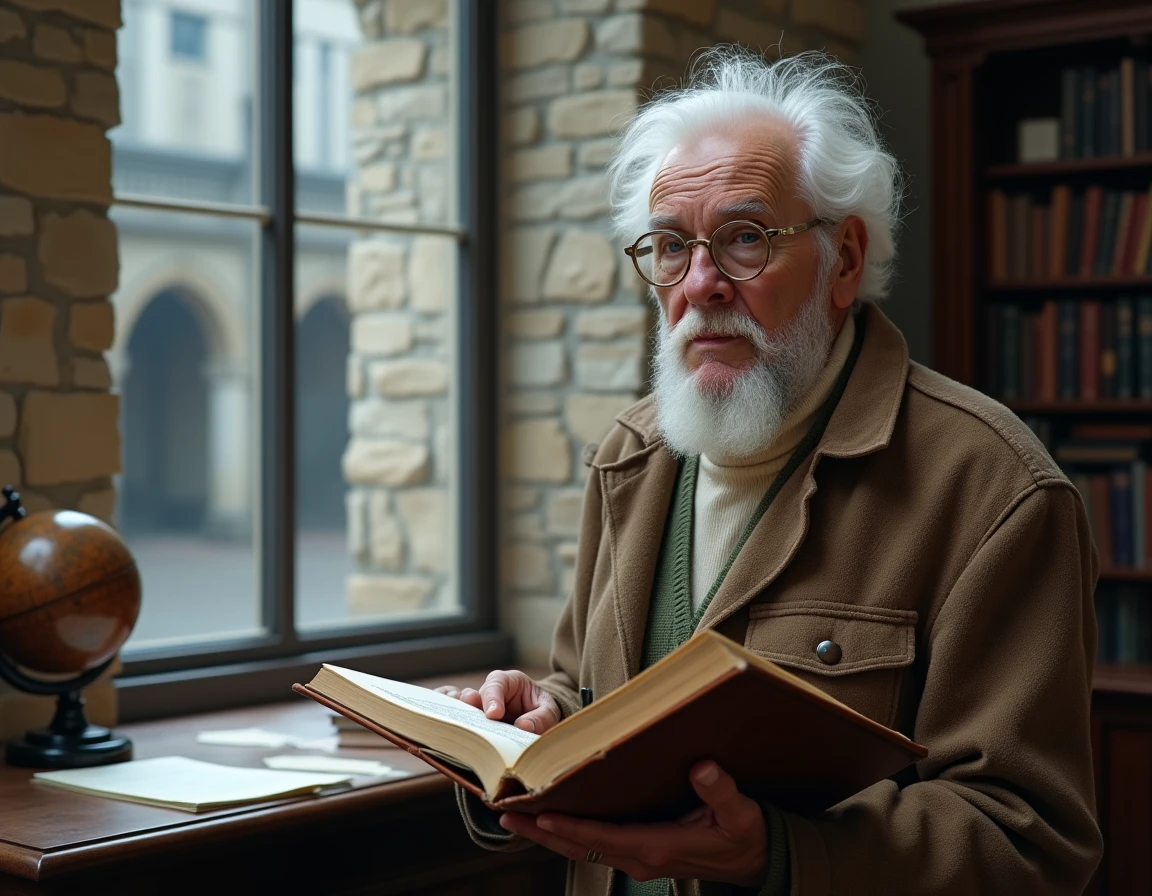
Martin Heidegger reformulated the problem starting from a mundane situation: our relationship with the everyday world. Before philosophizing about essence, we are first a being thrown into a context, with tools, habits, and material constraints. This is what he calls Dasein, being-there.
The Dasein does not float in a void. It manipulates objects, works, and speaks to other people. Heidegger emphasizes that understanding being does not primarily come from theory, but from this practical experience of the world.
The trap of impersonal existence
A point often overlooked: Heidegger distinguishes authentic existence from existence in the “One” (the “das Man”). When we merely do what everyone else does, think what everyone else thinks, we live in an impersonal mode. Regaining the sense of being involves taking control of one’s own possibilities.
This distinction is not moralistic. It describes a psychological mechanism that anyone can observe: the tendency to blend into collective expectations rather than interrogate what truly matters to oneself.
Freedom and social constraints: re-reading the philosophy of essence today
Recent debates in philosophy extend this reflection by integrating a parameter that neither Aristotle nor Sartre fully measured: the social, technical, and economic constraints that weigh on self-construction. We do not create ourselves in a void. The environment in which we grow up, the digital tools we use, the job market we face, all frame the possibilities of existence.
This more situated reading of freedom does not negate it. It makes it more realistic. We can build ourselves, but from materials that we have not all chosen.
Essence applied to collectives
An even more concrete extension: social metaphysics now poses the question of essence for collective objects. What makes a company this company and not another, beyond its registration number? What constitutes the identity of a professional group, a local community?
These questions do not fall into the realm of pure intellectual exercise. They arise as soon as we merge two structures, redefine a sector, or defend a threatened culture. The philosophy of essence then provides a framework for naming what resists change and what can evolve.
Meaning of life and practical philosophy: three markers for moving forward
Rather than listing currents, we can isolate three operational markers for anyone who wants to use reflection on the essence of being in their own life:
- Distinguish definition and lived experience: what we are on paper (diploma, status, nationality) never fully coincides with what we feel. Accepting this gap is already philosophical.
- Question your automatism: every time we act out of habit or conformity, we can ask ourselves whether this choice reflects a personal decision or a simple reproduction of Heidegger’s “One”.
- Think of essence as a process: neither fixed at birth nor completely malleable, our identity is built in successive layers. Contemporary philosophy tends to see essence as a provisional result, always revisable.
These three points do not resolve anything definitively, and the returns vary according to the philosophical traditions we refer to. Their interest lies in their immediate applicability: we can test them in a conversation, a professional decision, or a moment of doubt.
Philosophy with children: an underestimated field of experimentation
An angle rarely explored in articles on the essence of being: philosophical practice with children. When a child asks “what is it to be mean?”, they are posing a question of essence. They seek to know whether meanness is a permanent trait or a temporary behavior.
Thinking about being is worked on from a very young age. A child does not need to know Heidegger to distinguish what they do from who they are. They do this naturally, provided they are given a structured space for expression.
Reflection on the essence of being is not limited to lecture halls. It operates whenever we refuse to reduce a person, a group, or a situation to a fixed label. It is a tool for thought, not a cultural ornament, and it is in the everyday use we make of it that it takes on its true significance.