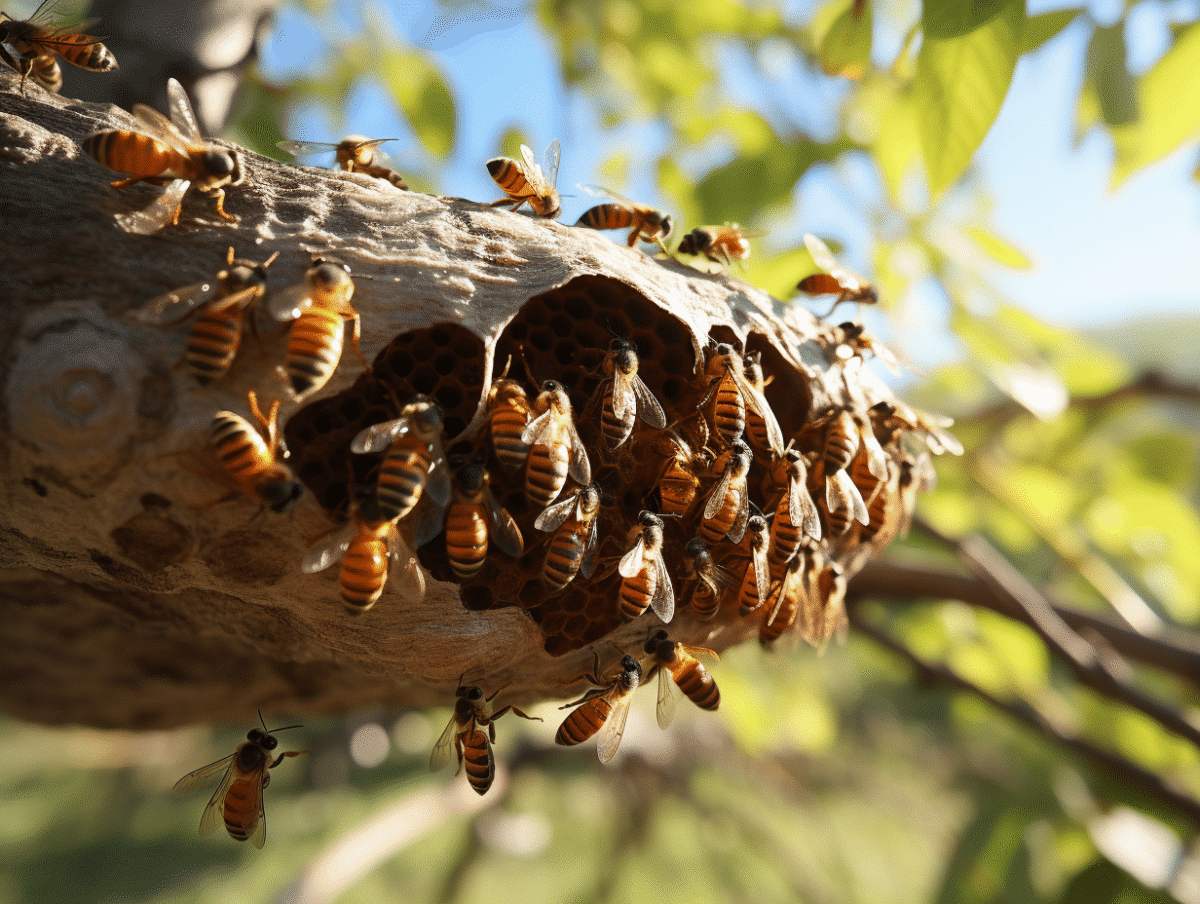
The world of insects is fascinatingly diverse, with species developing complex structures for the survival of their colony. Nests, varying greatly in shape, size, and material, are masterpieces of natural engineering. Much more than simple shelters, these constructions offer insight into the social organization of insects, their survival strategies, and their adaptation to the environment. From the geometric hive of bees to the labyrinthine ant hills, each nest reflects the specific characteristics of its builder species. Identifying and understanding these habitats is essential to grasp the complexity of insect life and the influence of their presence in ecosystems.
The different types of insect nests and their characteristics
In the vast mosaic of life that makes up our planet, insects, with their 80 million species, stand out due to an infinite variety of nests. These structures, built on land, buried underground, floating in water, attached to plants, or even established on other animals, are the result of millennia of evolution. Each nest, adapted to the standard morphology of the insect – head, thorax, and abdomen – and its tracheal system of respiration, illustrates a unique strategy for reproduction and survival.
The metamorphosis is at the heart of the insect life cycle, occurring as complete metamorphosis or incomplete metamorphosis, depending on whether the insect undergoes a total or partial transformation before reaching its adult form. This metamorphosis directly influences the design and use of nests, which often need to accommodate different phases of individual development. Keep this information in mind to understand the varied architecture of insect nests.
The classification of insects, and by extension their nests, is based on body structure and phylogenetic development. A major distinguishing feature lies in the number of wings. Membranous wings suggest aerial nests, while their absence may indicate underground or aquatic habitats. These clues are valuable for identifying the species and deducing the type of nest encountered.
Few know what a fly nest looks like. Yet, these discreet constructions, often overlooked, embody the remarkable ability of these insects to fit into various ecological niches. Fly nests, although less visible than those of bees or wasps, contribute equally to the balance of ecosystems by recycling organic matter. Therefore, observe these modest yet essential structures closely, as they are the stage for incessant activity, fundamental to the chain of life.

Tips for identifying insect nests and understanding their impact on the environment
Entomologists, by meticulously scrutinizing the world of insects, have established methods for identifying nests based on various criteria. Observe the sensory organs: eyes, antennae, mouthparts; these can provide clues about the type of insect and, consequently, the nature of the nest. The presence of droppings, eggs, larvae, or the coming and going of flying insects are all revealing elements of the species in question and its nesting habits.
Each nest has a specific function and, depending on its nature, it can be classified as beneficial or harmful to the environment. Among the benefits, some insects are true resource producers, such as honey-producing bees, or essential pollinators. Other species contribute to soil aeration or serve as a food source for various animals. Conversely, some nests, by their mere presence or by the species they harbor, can have a negative impact on humans and the environment, by transmitting diseases, for example.
For those wishing to deepen their knowledge of insect habitats, the diversity of nests is to be considered. Nests will vary greatly depending on the species: some build nests of chewed wood fibers, like wasps, while others, such as the Asian hornet Vespa velutina, construct more complex structures. European and Asian hornets, in particular, have distinct nests in terms of size and location, often in high or hidden places.
The destruction of nests should be approached with caution. If the nuisance is confirmed, the intervention of a professional is recommended, especially for species that may cause health problems. It is crucial to consider the ecological impact before undertaking any action. The nest of a European hornet in a park in Paris or that of an Asian hornet in Bordeaux will not represent the same urgency depending on their situation and their potential for integration or nuisance in the local ecosystem.