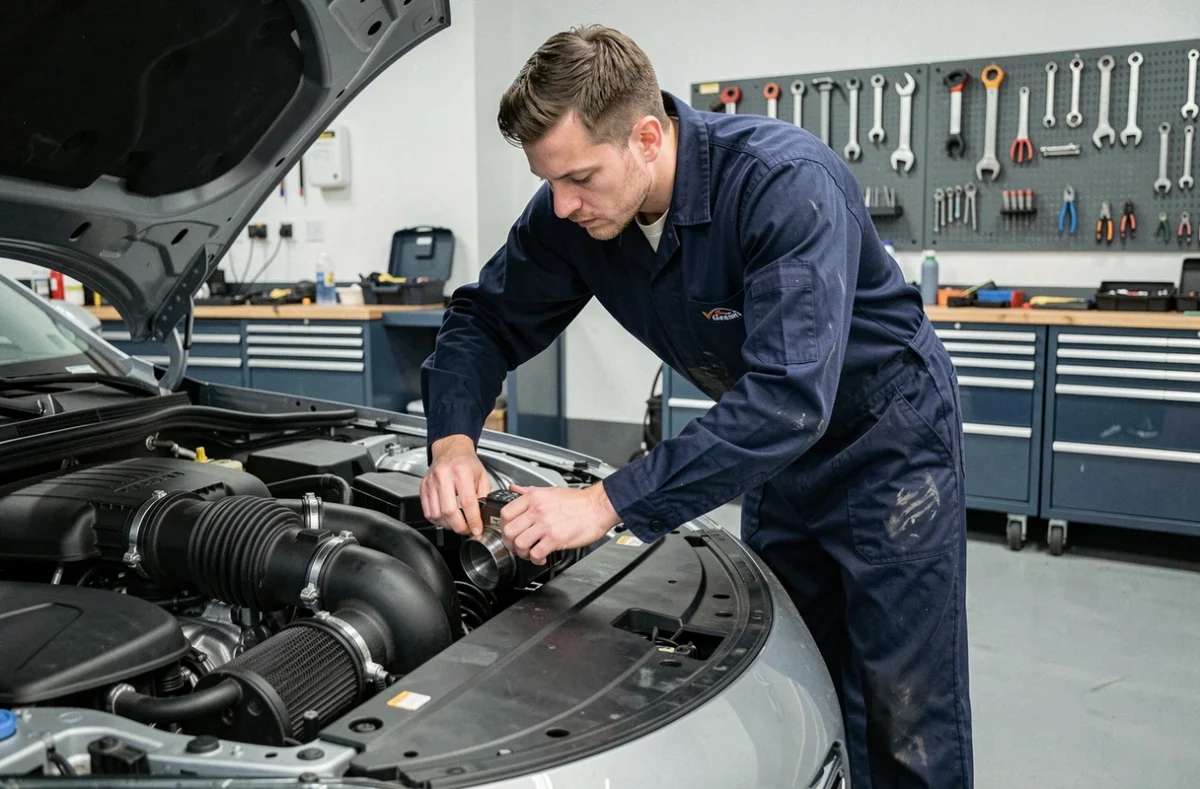
Customizing your car is not just about choosing a body kit or sticking a sticker on the hood. Behind every modification, whether aesthetic or mechanical, lies a strict regulatory framework and technical considerations that affect the long-term reliability of the vehicle. Understanding these constraints before pulling out the credit card helps avoid costly disappointments, both administratively and in terms of insurance.
Single Vehicle Approval: The Procedure Tuning Guides Overlook
Most articles on car optimization focus on power gains or looks. Few discuss what happens after installation, when the vehicle must remain compliant with regulations to circulate legally.
A part sold as “approved” does not guarantee that the entire vehicle remains compliant after installation. Compliance is assessed at the level of the complete vehicle, not the isolated part. Any modification affecting braking, suspension, lighting, tires, exhaust, or power can jeopardize the certificate of conformity.
In this case, a single vehicle approval from the DREAL becomes necessary. This procedure verifies that the modified vehicle meets current standards. It involves delays, costs, and sometimes the obligation to revert to the original configuration if the modification fails the examination.
According to the FAQ of DREAL Auvergne-Rhône-Alpes (updated on September 25, 2026), this obligation applies as soon as the characteristics listed on the registration certificate no longer match the reality of the vehicle.
Before investing in performance parts or customization elements, checking whether the intended modification triggers this procedure allows for an accurate assessment of the project’s real cost. Specialized catalogs like those offered on vegatuning.fr help target parts compatible with your model, but the issue of homologation must be addressed separately.

Engine Remapping and Car Insurance: A Common Blind Spot
Engine remapping, even presented as a simple “stage 1,” modifies the technical characteristics of the vehicle. Power, torque, emissions: these parameters change, along with the administrative and contractual obligations of the owner.
A remapping that is not declared to the insurer can weaken compensation after a claim. Insurance covers a vehicle as described in the contract. If the actual characteristics differ from those declared, the insurer may reduce or refuse coverage.
The steps to follow after a remapping involve several stages:
- Declare the modification to your insurer to adjust the contract (the premium may increase, but failing to declare exposes you to a much greater risk).
- Update the vehicle’s characteristics on the registration certificate if the fiscal power or emissions change, which may require a visit to DREAL.
- Keep the preparer’s documents, including the applied mapping and power measurements before/after the intervention.
Field feedback varies on the ease of these procedures. Some insurers accept a remapping declaration without difficulty, while others impose exclusions or significant surcharges. Inquiring before the modification, rather than after, remains the only reliable approach.
Removal of Pollution Control Devices: The Regulatory Red Line
Removing the particulate filter (DPF), neutralizing the EGR valve, or disabling the SCR/AdBlue system are among the most discussed modifications in tuning forums. The argument put forward: unleash power, reduce clogging, improve engine response.
Removing or neutralizing a pollution control device is prohibited on a vehicle operating on the road. Article L318-3 of the Highway Code regulates this prohibition, regardless of the outcome of the technical inspection. In other words, even if the vehicle passes the inspection, the modification remains illegal.
The penalties are not trivial. The owner faces a fine, and the professional who carries out the modification assumes liability. However, for a vehicle exclusively intended for track use (not registered or with a “competition vehicle” registration certificate), these constraints do not apply in the same way.
This distinction between road use and track use is fundamental for guiding your customization choices. A high-performance tuning project begins by defining the actual use of the vehicle.

Aesthetic and Audio Customization: What Changes Without Touching the Engine
Not all modifications involve mechanics. Aesthetic customization (wrapping, wheels, lighting, interior) and the installation of a high-quality audio system represent a significant part of tuning projects, with generally lighter regulatory constraints.
For aesthetics, the points of vigilance focus on specific elements:
- Tinted windows must comply with a minimum transparency rate on the front glass (windshield and front side windows).
- Lighting modifications (LEDs, additional headlights) must remain compliant with homologation standards to avoid dazzling other users.
- A change in body color requires an update of the registration certificate.
On the audio side, installing a quality music system (amplifier, subwoofer, speakers) does not pose regulatory issues as long as the sound level remains reasonable. The added weight from the audio installation can alter the vehicle’s behavior, especially if the equipment is concentrated in the trunk. Distributing the components and ensuring that the suspension properly absorbs the additional load helps avoid unpleasant surprises.
The quality of the components and installation makes the difference between a system that lasts and a setup that causes electrical interference. Choosing original or equivalent quality parts limits the risks of malfunction in the vehicle’s electrical network.
Each customization project benefits from being thought of as a coherent whole rather than an accumulation of isolated modifications. Defining a global budget, anticipating administrative constraints, and choosing parts suited to your specific model transforms a series of impulsive purchases into a truly refined vehicle.