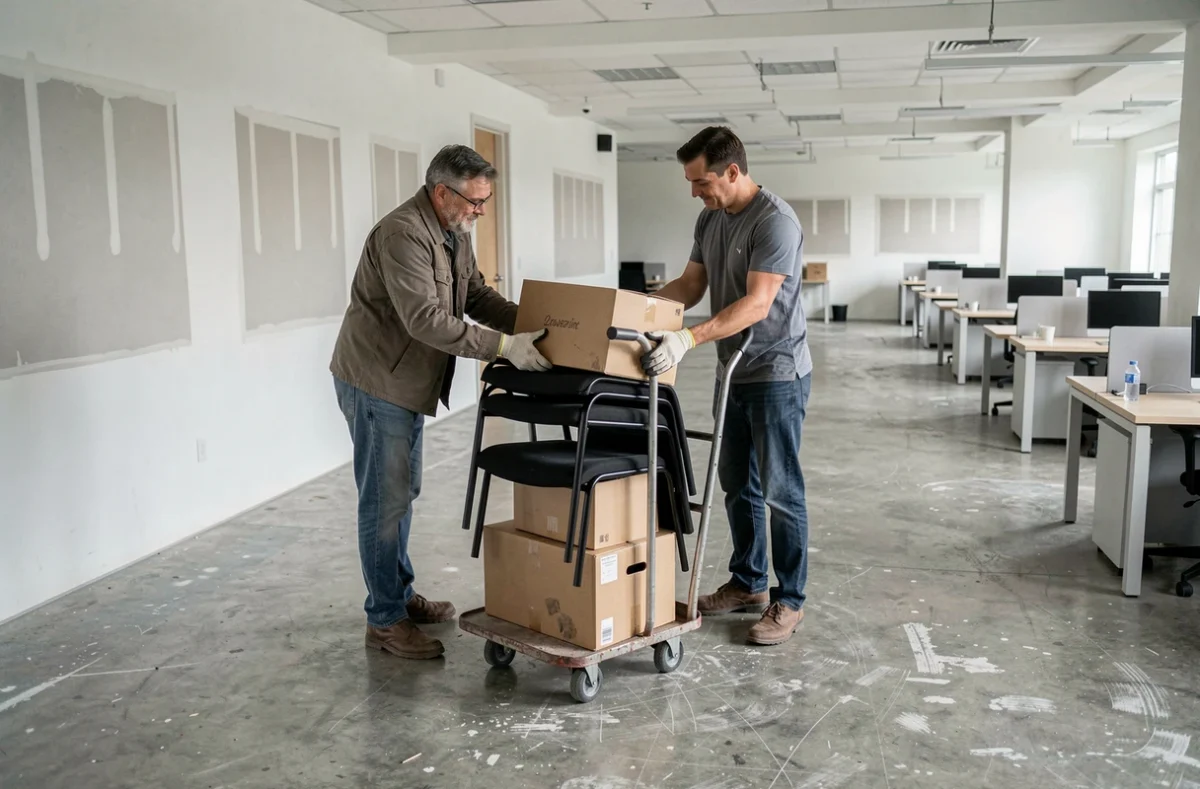
A move of premises, an end of lease, a restructuring: the clearance of professional offices rarely happens at the right time. Teams are focused on their activities, no one really knows what to throw away, and furniture piles up in the corridors. However, the success of this operation relies less on manpower than on a few decisions made in advance.
Furniture, IT, archives: three streams not to mix during clearance
You may have seen an office emptied in a hurry, with screens placed on dismantled cabinets and archive boxes wedged between two units? This mix complicates everything: transport, sorting, and especially regulatory compliance.
Each category of items in an office follows a distinct channel. Used furniture (desks, chairs, cabinets) falls under the waste of furniture elements. Computers, printers, and cables follow the WEEE (waste electrical and electronic equipment) channel. Paper archives require specific handling, especially if they contain personal or confidential data.
Separating these three streams from the initial inventory avoids back-and-forth trips to the waste disposal site and ensures proper traceability. In practice, during the preliminary visit to the premises, assign a grouping area by category. For example: furniture in the open space, IT in a meeting room, archives in the storage room. This simple spatial organization saves several hours on the day of evacuation.
Before planning anything, it is useful to consult office clearance with Les Entreprenautes to understand the specificities related to professional premises.

Data deletion before disposal: a often forgotten obligation
When emptying offices, the temptation is strong to just pile everything into a truck without asking questions. Old computers, external hard drives, service phones: straight to the dumpster. This is a mistake that can be costly.
In March 2024, the CNIL published a document reminding that data must be securely deleted before any disposal, repair by a third party, or end of rental of the equipment. A simple waste tracking slip does not prove that the data has been erased.
What should you do concretely? Before removing a computer from the office, ensure that the hard drive has been wiped with certified deletion software, or physically remove it for destruction. For companies managing sensitive data (clients, health, finance), this step is not a detail: it is a legal obligation.
Formalize the exit of the IT equipment
Create a simple table listing each device (serial number, condition, deletion method used, final destination). This document serves as proof in case of an audit and facilitates internal tracking. A shared spreadsheet between the IT department and the clearance provider is sufficient for most organizations.
Sorting professional waste: recent rules to know
You may already sort paper and cardboard in the office. But obligations have evolved in recent years, and a large-scale clearance exposes you more to inspections than regular daily activities.
- Since January 1, 2024, all professionals must sort their bio-waste at the source. During a clearance, this concerns food scraps stored in a communal kitchen refrigerator or decorative plants.
- Since January 1, 2025, textiles are part of the streams to be sorted separately. Curtains, removable carpets, chair covers: they no longer go with regular bulky waste.
- The hierarchy of treatments requires examining reuse before recycling. An office in good condition can be donated to a charity or resold, rather than crushed. However, the AGEC law does not require private companies to systematically reuse their own equipment.
These rules are not punitive, but ignoring them during a clearance is taking an unnecessary risk. A specialized provider knows these channels and can direct each stream to the right destination.

Reuse of office furniture: what can be sold and what can be donated
Not all office furniture is equal in the second-hand market. Brand ergonomic chairs, metal cabinets, and solid wood meeting tables find buyers quite easily. Low-quality melamine desk tops or yellowed removable partitions, much less so.
Assessing the residual value of furniture before clearance allows you to decide what is worth reselling, donating, or disposing of. A simple criterion: if the furniture is less than ten years old and shows no structural damage, it likely has a second life possible.
Donations and charities
Several organizations collect professional furniture to equip community spaces, solidarity coworking spaces, or integration structures. Donating avoids waste disposal fees and can be eligible for a tax receipt. However, plan for a delay: most charities request a few days to organize the pickup.
Schedule and coordination: the point everyone underestimates
Clearing an office floor is not planned like a residential move. The constraints are different: access via a freight elevator, schedules imposed by the landlord or the co-ownership, possible presence of employees on other floors.
Blocking a date without checking access constraints to the building is the leading cause of delays. Before setting the D-day, ask three questions: is the freight elevator bookable? Does the truck parking require a municipal permit? Will access badges still be active?
Also, allow for some margin. A clearance that seems doable in one day often takes a day and a half, especially when it involves dismantling wall-mounted furniture or emptying forgotten storage spaces in the basement.
The clearance of professional offices is primarily a preparation job. The physical part (loading, transporting, evacuating) goes smoothly when sorting, channel, and schedule decisions have been made in advance. Separating the streams from the start, securing digital data, and checking recent sorting obligations: these three points resolve the vast majority of complications.