
When finishing a weight training session and experiencing soreness the next day, the temptation to seek a boost from oils and natural supplements is strong. The link between certain dietary oils, muscle recovery, and muscle gain deserves careful examination, because not everything labeled “natural” necessarily produces the expected results.
Omega-3 and Muscle Recovery: What Recent Data Says
On the ground, many practitioners add fish oil or flaxseed oil capsules to their diet in the hope of accelerating muscle growth. Omega-3s (EPA and DHA) primarily affect markers of muscle damage and the intensity of soreness after exertion.
A review published in September 2026 confirms that omega-3s support recovery rather than direct hypertrophy. The results remain heterogeneous from study to study, and neither the appropriate dosage nor the ideal EPA/DHA ratio has reached consensus to date.
Specifically, incorporating a source of omega-3 (fish oil, flaxseed oil, hemp oil) into one’s daily diet can reduce post-workout inflammation. Here, you can find tips to boost muscle growth that emphasize the importance of combining nutrition and active recovery.
However, relying solely on an oil to gain muscle is a misunderstanding. Omega-3s facilitate the process; they do not trigger it.

Natural Creatine: The Best-Documented Lever for Muscle Gain
Creatine is naturally found in red meat and fish. It can also be consumed as a supplement, and it is probably the natural substance whose effect on strength and muscle mass has been the most studied.
A systematic review published in September 2026 on women engaging in physical activity reports an overall positive effect, although the heterogeneity of studies prevents firm conclusions from being drawn according to each discipline. Another synthesis published at the end of September 2026 clarifies a often misunderstood point: creatine improves hypertrophy indirectly by allowing for more strength and training volume.
For muscle size gains to appear, supplementation must be combined with at least eight weeks of resistance training. Without sufficient mechanical stimulus (weight training with progressive loads), creatine alone does not produce visible results on mass.
How to Integrate It Practically
- Prioritize creatine monohydrate, the most studied and least expensive form.
- Combine intake with a structured training program with progressive load over several weeks.
- Maintain a sufficient protein intake to provide the amino acids necessary for muscle synthesis.
Plant Proteins and Nutrition for Muscle Growth
It is often said that only animal proteins (whey, casein, eggs) allow for effective muscle gain. Recent data nuances this idea. A synthesis published in September 2026 indicates that plant proteins can be just as effective as long as one considers total quantity and amino acid profile.
Hemp, pea, soy, or brown rice provide complete or complementary proteins. The difficulty with plant sources lies in their sometimes lower digestibility and their leucine content, a key amino acid for triggering muscle protein synthesis.
Adjusting Diet According to Practice
For a weight trainer who trains several times a week, the issue is not choosing between animal and plant proteins, but covering total needs. Spreading protein intake over three to four meals throughout the day is more crucial than the source chosen.
Vegetable oils rich in fatty acids (hemp, walnuts, rapeseed) complement this intake by providing quality calories, useful during the mass gain phase when the body needs a caloric surplus to build muscle tissue.
Important Oils and Massage: A Limited Role in Recovery
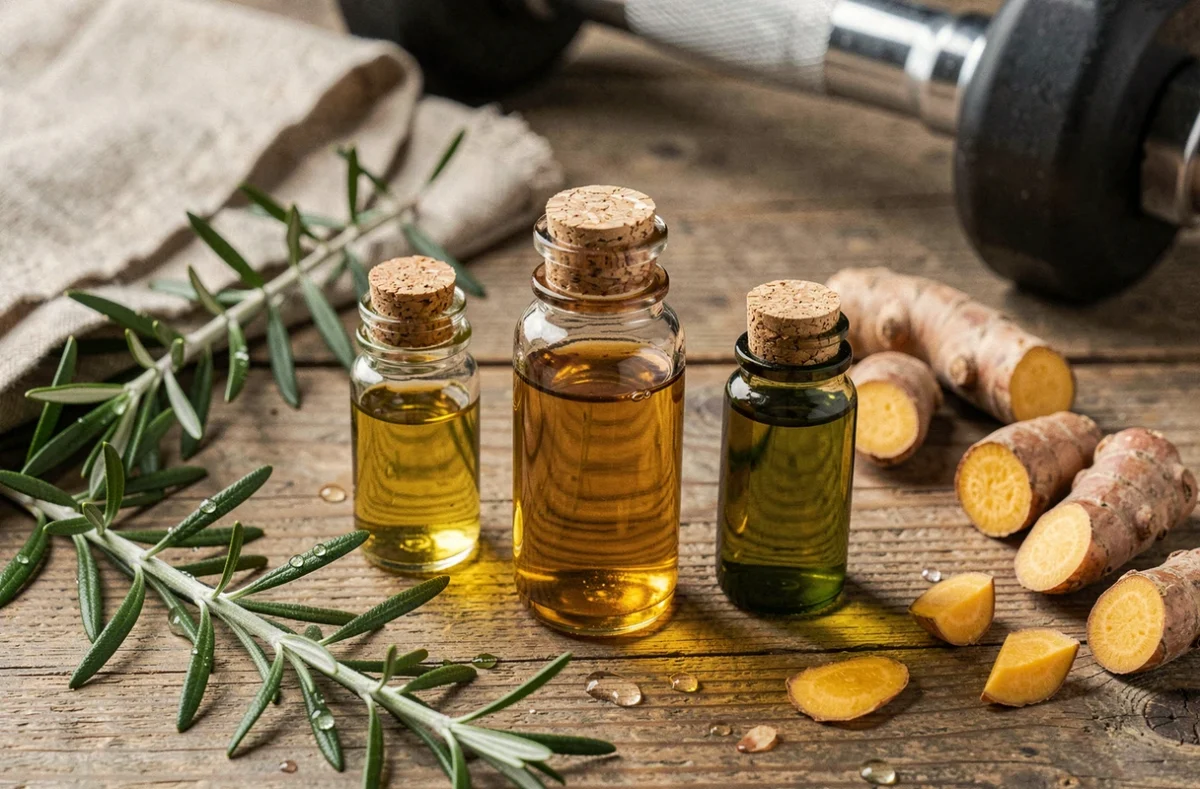
Important oils from wintergreen, peppermint, or lemon eucalyptus are popular among athletes for post-effort massages. They provide a sensation of warmth or coolness that temporarily relieves muscle tension.
No solid data shows that important oils stimulate hypertrophy. Their interest is limited to recovery comfort: reducing the feeling of stiffness, subjective improvement of muscle relaxation. Feedback varies greatly from one user to another on this point.
A massage with a carrier vegetable oil (sweet almond, arnica) combined with a few drops of important oil can be integrated into a rest routine, but it does not replace training or proper nutrition.
Sleep and Rest: The Underestimated Natural Factor in Weight Training
We invest in supplements and oils while the most powerful lever for the natural secretion of growth hormone remains deep sleep. Insufficient rest compromises recovery and directly hinders protein synthesis.
Structuring nights around a regular schedule, limiting screens before bedtime, and aiming for sufficient sleep duration produces measurable effects on the body’s ability to rebuild muscle fibers damaged by training.
- Intense training without adequate recovery leads to overtraining, not growth.
- The quality of sleep affects cortisol levels, a hormone that, in excess, promotes muscle catabolism.
- Deep sleep phases are when the body releases the most growth hormone.
Relying on omega-3 oils for recovery, creatine for training volume, and well-distributed proteins for muscle synthesis forms a solid foundation. The most often neglected factor remains rest, which costs nothing and conditions the effectiveness of everything else.