Improving the mobility of seniors at home is essential for allowing them to maintain their autonomy and a high quality of life. The selection of appropriate equipment must meet specific needs: safety, comfort, and ease of use. This involves a careful assessment of the different living spaces and the daily challenges faced by elderly individuals. Suitable solutions may include grab bars, stairlifts, bath seats, or even non-slip flooring. Choosing these aids wisely requires a deep understanding of the physical limitations of seniors and the ergonomics of available products.
Assessment of needs and selection criteria for mobility equipment
Adapting the home is a major issue for elderly individuals wishing to extend their autonomy and delay admission to a nursing home. The initial step is to assess the specific needs of the individual, taking into account both their physical capabilities and their daily environment. The selected technical aids must not only compensate for mobility deficits but also integrate harmoniously into the living environment.
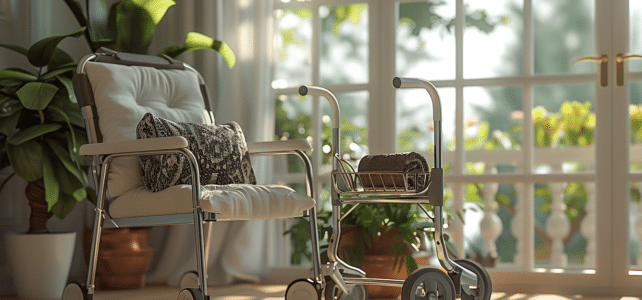
Mobility equipment varies widely: wheelchairs, walking canes, walkers, electric scooters, ramps, grab bars, raised toilet seats, etc. Each device addresses a different need, whether it’s moving within the home, overcoming obstacles, or ensuring security for staying at home. The choice must be personalized, thoughtful, and guided by functionality.
For seniors facing stairs, the stairlift for standing or sitting can represent a significant solution. This option should be selected based on the layout of the home and the degree of loss of autonomy of the elderly person. Stability, load capacity, ease of use, and the presence of built-in safety features are key criteria in the decision-making process.
Home modifications include the optimal arrangement of mobility equipment to promote an unobstructed path. Collaborating with health professionals, occupational therapists, and specialized installers ensures that the chosen solutions genuinely enhance the comfort and autonomy of seniors. Consider the scalability of needs and the possibility of future adjustments to ensure a sustainable and relevant investment.
Innovative technologies and solutions for the autonomy of seniors at home
Home automation is proving to be a valuable ally in improving the daily lives of seniors. Home automation systems offer simplified management of lighting, heating, or shutters, thereby contributing to autonomy and comfort at home. Consider installations of voice commands or intuitive control panels, designed for users with specific needs. These technologies reduce risks associated with reduced mobility by limiting the necessary movements to perform daily tasks.
In the realm of safety equipment, alarms and connected bracelets are at the forefront of accident prevention. Alert devices allow for rapid intervention in case of an incident, particularly in high-risk areas like the bathroom. Innovations in teleassistance enhance this security, providing immediate assistance to elderly individuals, wherever they are in their home. This service, often managed by professionals, ensures significant peace of mind for seniors and their families.
Connected objects also play an active role in monitoring health and maintaining the autonomy of elderly individuals. From blood pressure monitors to glucometers, and heart rate monitoring watches, these devices collect vital data and alert users or healthcare professionals in real-time in case of anomalies. The interaction between these objects and healthcare professionals allows for treatment adjustments and complication prevention, thus promoting a secure stay at home and an improvement in quality of life.